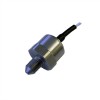
Digital compensation is the process of collecting many measured points at different pressures and temperatures and using this data to correct the output of a pressure transducer so that the pressure accuracy and thermal errors can be improved beyond what is practically achieved with analogue compensation.
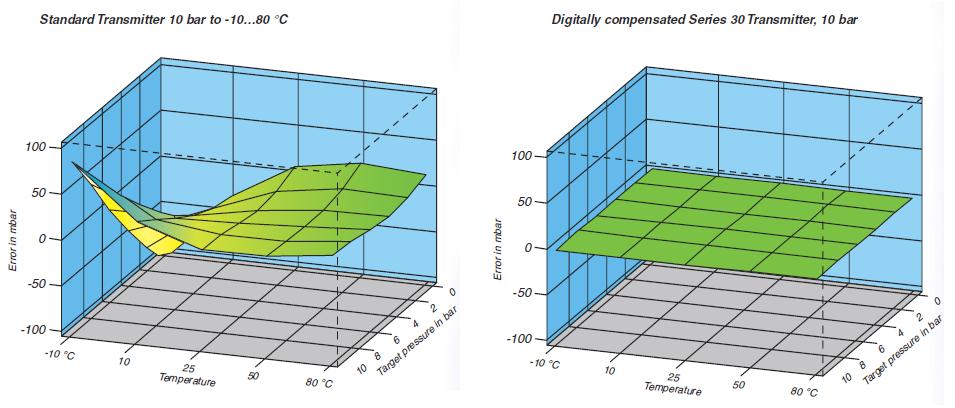
There are mainly two types of digital compensation:
The first method which is often referred to as a “look-up table” stores all the measured points in the digital memory of the sensor and they are recalled when required to compensate the pressure reading. The software extrapolates between measured points so that every pressure reading can be digitally characterised. The more measurements that are stored the more accurate is the extrapolation and thus the overall accuracy.
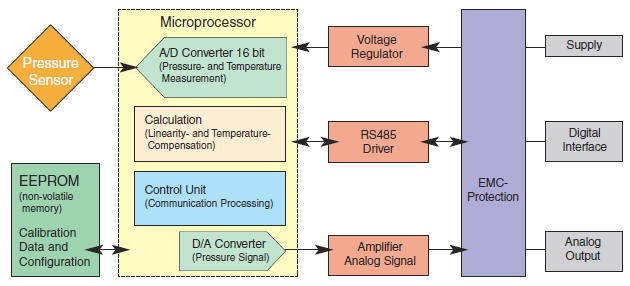
The second method is to mathematically analyse the data to define a mathematical formula called a “Polynomial” which best matches the unique characteristic behaviour of a particular pressure transducer. The equation constants are then stored in the digital memory of the sensor and each pressure reading is compensated by applying the mathematical formula.
The first method consumes more memory storage and less processing power while the second method requires much less memory storage but much faster processing power.
 High Accuracy DP Sensors
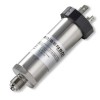 1000 mbar absolute vacuum range 0-10Vdc output air pressure sensor for research use
- Wide barometric range high precision pressure transmitter
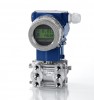 -3 to 3 psi dp range high accuracy 4-20mA air pressure transmitter for water treatment use
Glossary of Pressure Sensor technical terms
- Ceramic Pressure Sensors
- Dry Cell
- Dry/Dry
- HART®
- Isolation Diaphragm
- LVDT – Linear Variable Differential Transformer
- Pressure Sensors
- SOI – Silicon on Insulator
- Stainless Steel Pressure Sensors
- Static Line Pressure
- Wet/Dry
- Wet/Wet
Help from Pressure Sensor resources
- Pressure Sensor Accuracy Specifications
- Supply voltage and load resistance considerations for pressure transmitters
- How to Connect a 4-20mA Current Loop Pressure Transmitter
- What is difference between working, burst and over pressure
- What can a DP sensor be used to measure beyond differential pressure?